Ask a room full of CEOs how fixed their data is, and most of them will guess high. Ask an AI system to actually use that data, and the guess usually falls apart.
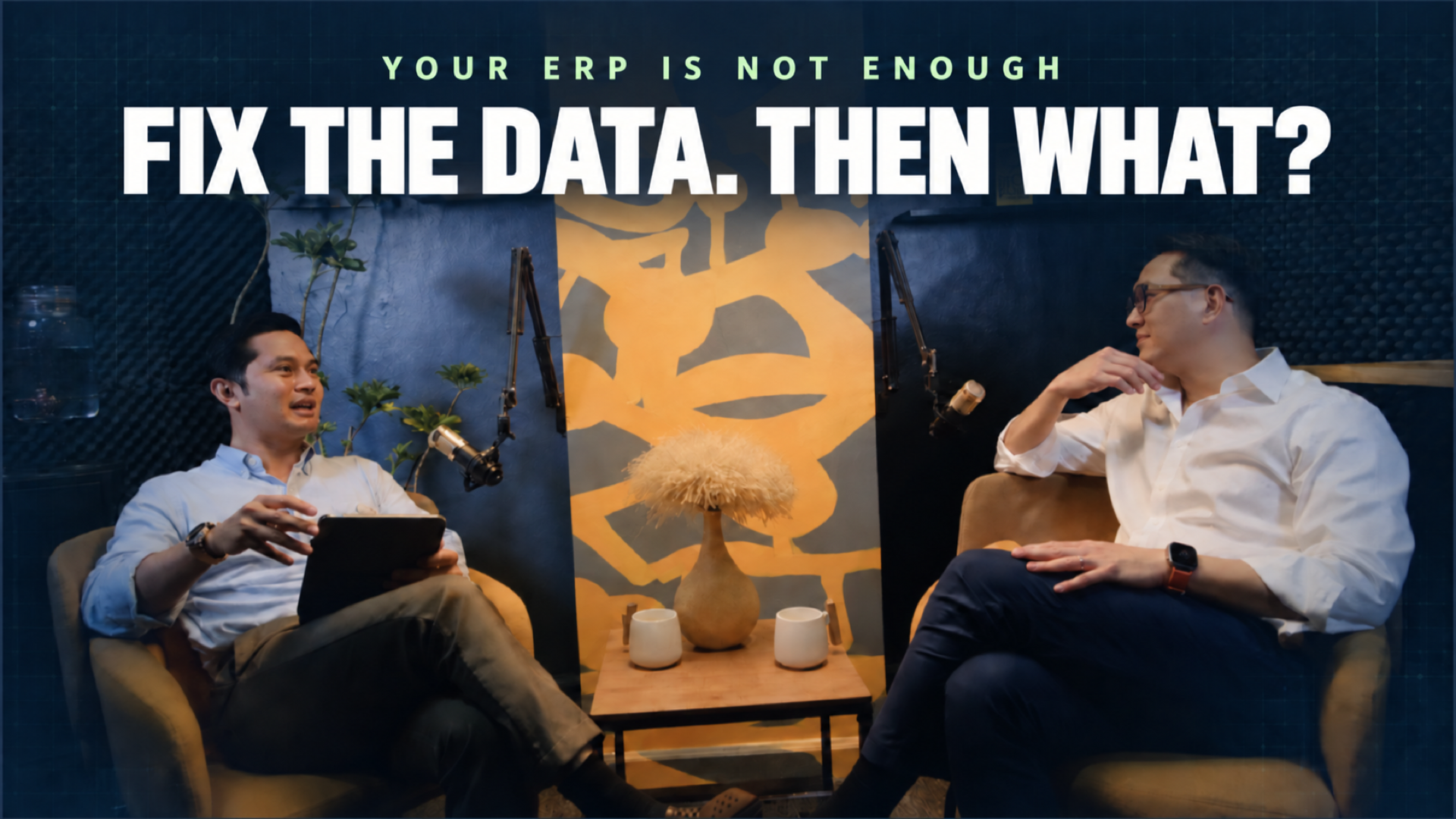
Here’s the simplest way I can put it. Rolan Marco Garcia, CEO of Embiggen X, was sitting in an industry conference not long ago, listening to CIOs from large companies talk about their data. “They were saying, you know, 70% of our data is fixed,” he recalls. “Okay. Sure.” Maybe, for them.
But he sees a very different number when he walks into a mid sized or small company. “If you talk about medium companies, or even small companies, 90% of the data is not fixed. It’s all unstructured. It’s all siloed. It’s all stuck in the software, or even worse, in just the mind of a very long employee, or even just the CEO or the founder.”
That gap between what leaders assume and what a real data maturity assessment would find is where most AI projects quietly go wrong before they even start.
What a data maturity assessment actually checks
A data maturity assessment is a straightforward audit of how usable your operational data really is: where it lives, whether it’s structured consistently, whether it’s centralized in one place the whole company can trust, and how much of it depends on one person remembering things correctly.
It’s not a technical deep dive into individual records. It’s a bigger, blunter question: if you took away the two or three people who “just know how things work” here, would the data still make sense to anyone else?
Why nobody wants to talk about this
Garcia calls it “the unsexy side of AI,” and that’s exactly right. Nobody gets excited discussing spreadsheet structure in a boardroom. Everybody gets excited discussing which AI agent to build next.
That’s precisely why the gap persists. The conference-room conversation stays at the tooling level because tooling is visible progress. Data maturity isn’t visible until an AI project runs straight into it.
The 70% number and the 90% number are both true, just for different companies
This isn’t a contradiction. It’s a size effect. Large enterprises have had decades and real budgets to build centralized systems, data teams, and governance processes. Mid sized and smaller companies usually haven’t, and most of their institutional knowledge still lives in the people who’ve been there the longest, not in a system anyone else can query.
Independent research backs up exactly this pattern. A Workplace Knowledge and Productivity Report surveying more than 1,000 US workers found that 42% of institutional knowledge is unique to the individual who holds it: acquired specifically for their role, and not shared by any coworker. When that person is out sick, on vacation, or gone for good, the people around them simply can’t do 42% of that job until the knowledge gets painstakingly rebuilt. The same report put a number on the drag this creates: the average large US business loses an estimated 47 million dollars a year in productivity from inefficient knowledge sharing, and knowledge workers waste roughly 5.3 hours a week either waiting on information from colleagues or recreating knowledge that should already exist somewhere.
Data silos make the same problem worse from a different angle. A Forrester study commissioned by Airtable, surveying over 1,000 individual contributors and decision makers across the US and UK, found that employees lose as much as 12 hours a week just searching for data scattered across systems, at large organizations running an average of 367 different software tools. Seventy-nine percent of knowledge workers said their teams were siloed from each other. Sixty-eight percent said it actively hurt their work.
That lines up with what we already established when we looked at AI data readiness more broadly: IDC and Gartner both estimate unstructured data makes up somewhere between 80% and 90% of everything a typical enterprise holds. The 90% figure Garcia sees in mid sized industrial companies isn’t an outlier. It’s the norm, just rarely said out loud in a boardroom.
Why this matters more once AI enters the picture
An AI system doesn’t know which of your three “sources of truth” is the real one. It doesn’t know that the spreadsheet your production planner keeps on his own laptop is actually more accurate than the ERP. It just reads what it can reach, and if what it can reach is incomplete, inconsistent, or trapped in someone’s head, the output looks confident and is wrong.
That’s the actual risk of skipping a data maturity assessment. Not that the AI project stalls, but that it doesn’t. It ships, it looks fine in a demo, and it quietly makes bad recommendations using the 90% of data nobody ever checked.
How to run your own quick data maturity check
You don’t need a consultant in the room to get an honest first answer. Ask three questions across your leadership team:
- If our most senior production planner, controller, or ops lead left tomorrow, what decisions would we no longer know how to make correctly?
- When two departments report the same number, does it ever come out different, and if so, does anyone actually know why?
- How much of what “everyone knows” about how we run things is written down anywhere an AI system, or a new hire, could actually read it?
If those answers make you uncomfortable, that discomfort is the real starting point of an AI project, not a detour from it.
How we approach this at Embiggen X
This is exactly what the diagnostic phase of our three phase method is built to surface: not just whether your data is technically clean, but whether it’s structured and centralized enough that an AI system, or a new employee, could actually rely on it without asking around first. Data Core turns that scattered, tacit knowledge into one connected operational layer instead of leaving it locked in someone’s head or a personal spreadsheet.
FAQ
What is a data maturity assessment? A data maturity assessment is an audit of how usable, structured, and centralized your operational data actually is, including how much of it depends on undocumented, tacit knowledge held by specific employees rather than existing in a shared system.
Why do leaders overestimate how “fixed” their data is? Because the visible parts of data, like a working ERP or a clean spreadsheet, feel like the whole picture. What’s missing is usually invisible: tacit knowledge in someone’s head, duplicate sources of truth across departments, or systems that never talk to each other. Nobody sees the gap until they specifically go looking for it.
How much company knowledge is at risk if a key employee leaves? Research from the Workplace Knowledge and Productivity Report found that 42% of institutional knowledge is unique to the individual who holds it. When that person is unavailable, their colleagues typically cannot perform 42% of the associated job until that knowledge is rebuilt.
Do data silos really cost that much time? Yes. A Forrester study commissioned by Airtable found employees at large organizations lose up to 12 hours a week searching for data spread across disconnected systems, a direct cost of unresolved data silos.
Should we run a data maturity assessment before or after starting an AI project? Before. It’s the same principle as the data readiness question: an AI system amplifies whatever data foundation it’s built on. Find out how fixed your data actually is first, not after the project stalls.
Sources
- Panopto / YouGov, Workplace Knowledge and Productivity Report (2018), surveying over 1,000 US workers. panopto.com/company/news/inefficient-knowledge-sharing-costs-large-businesses-47-million-per-year
- Forrester Consulting (commissioned by Airtable), The Crisis of a Fractured Organization (2022), surveying over 1,000 individual contributors and decision makers in the US and UK. venturebeat.com/data-infrastructure/report-data-silos-cause-employees-to-lose-12-hours-a-week-chasing-data
- IDC / Gartner estimates on unstructured data as a share of enterprise data (80-90%), as cited in our AI data readiness research.
Not sure how fixed your data really is? Book a free AI assessment with Embiggen X and find out before the next AI conversation in your boardroom.